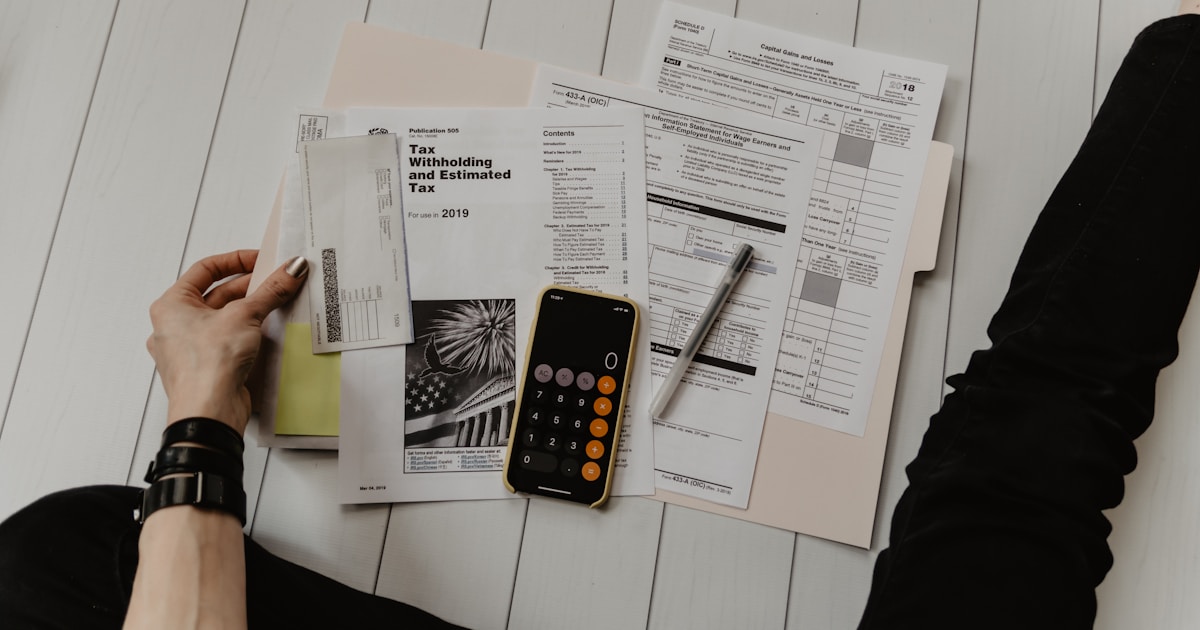
Financial and Bank Statement Requirements for Australian Tourist Visa from Pakistan
How to meet the financial and bank statement requirements for an Australian tourist visa from Pakistan. Minimum balance, income patterns, sponsor funding, and 2026 guidelines.
Financial and Bank Statement Requirements for Australian Tourist Visa from Pakistan
Complete guide to bank statements, minimum balances, income patterns, and financial documentation for Pakistani applicants
Overview: Why Financial Documentation Matters for Your Subclass 600 Application
When a Pakistani applicant submits a Subclass 600 (Visitor Visa) application to Australia, the financial documentation is arguably the single most influential factor in the decision-making process. The Department of Home Affairs evaluates whether you can genuinely support yourself during your stay in Australia without breaching your visa conditions. This means proving you have sufficient funds for accommodation, travel, daily expenses, and return airfare — all without the temptation to seek unauthorized employment in Australia.
For Pakistani applicants specifically, financial scrutiny is heightened. The Australian High Commission in Islamabad processes thousands of applications from Pakistan each year, and a significant proportion of refusals stem directly from financial documentation failures. Whether it is an insufficient bank balance, irregular income patterns, missing tax records, or unconvincing sponsor funding — these issues are the most common reasons visas are denied.
This guide covers every aspect of financial documentation you need to know. We break down minimum bank balance requirements by visa duration, analyze how visa officers read your bank statements, explain SBI/SBP rules for international transfers, and walk through the role of tax returns and property evidence. If you want the full picture of the Subclass 600 process, we recommend reading our complete Australia Subclass 600 master guide.
Key Takeaway: Your bank statement is not just a number — it is a story about your financial life. Visa officers look for consistency, stability, and a clear picture of how you earn and spend money. A single inconsistent transaction can raise red flags.
Minimum Bank Balance Requirements for Australian Tourist Visa
There is no officially published "minimum balance" figure from the Department of Home Affairs. However, based on years of processing experience and successful applications, there are widely accepted benchmarks that Pakistani applicants should aim for. These figures consider the cost of living in Australia, average hotel prices, daily meal expenses, domestic travel costs, and return airfare from Pakistan.
The following table provides recommended minimum bank balances based on the duration of your intended stay. These are guidelines, not official requirements, and you should always aim to have more than the minimum to demonstrate genuine financial capacity.
| Visa Duration | Recommended Min. Balance (PKR) | Recommended Min. Balance (AUD) | Notes |
|---|---|---|---|
| 3 months | 1,500,000 – 2,000,000 | 8,000 – 11,000 | Covers basic accommodation and living expenses for a short visit |
| 6 months | 2,500,000 – 3,500,000 | 13,000 – 19,000 | Extended stays require larger reserves for sustained living costs |
| 12 months | 4,000,000 – 6,000,000 | 21,000 – 32,000 | Longer stays need substantial funds to demonstrate financial independence |
| With sponsor | 500,000 – 1,000,000 | 2,700 – 5,300 | Lower personal balance when sponsor provides accommodation and funding |
These figures assume you are paying for your own accommodation and travel. If you have a sponsor in Australia who will cover your expenses, your personal bank balance can be lower — but the sponsor's financial documents become critically important. We will cover sponsor funding in detail later in this guide.
Pro Tip: Always keep at least 20-30% more than the recommended minimum in your account. Visa officers view a healthy buffer as a sign of financial stability. Check our visa cost calculator to understand the full financial picture of your application.
Income Pattern Analysis: What Visa Officers Look For
A bank balance alone does not tell the full story. Visa officers at the Australian High Commission are trained to analyze the pattern of income and expenditure in your bank statements. They look for consistency, regularity, and logical explanations for any large or unusual transactions. The pattern of your finances matters as much as the final balance.
For salaried individuals, the most favorable pattern is a consistent monthly salary credit that grows steadily over time. Officers expect to see a regular inflow of funds — typically monthly or bi-monthly salary deposits — followed by logical outflows for rent, utilities, groceries, and other living expenses. Any sudden large deposits that cannot be explained by salary, business income, or property sale will raise questions.
Self-employed applicants face greater scrutiny. Since there is no employer-verified salary, officers look for business account activity, regular client payments, and seasonal income patterns that match the nature of the business. A freelancer who receives inconsistent payments may need to provide additional documentation such as contracts, invoices, or client correspondence to explain the income variability.
The following patterns are viewed favorably by visa officers: consistent salary credits for at least 6-12 months, steady growth in account balance over time, regular and predictable expenditure patterns, minimal reliance on overdraft or credit facilities, and no large unexplained cash deposits.
Conversely, these patterns raise red flags: a sudden large deposit in the weeks before the application, an account that was recently opened, multiple accounts with funds being moved between them, frequent large cash deposits without clear income sources, and a balance that drops significantly after the application date.
For Pakistani applicants who receive income through informal channels (such as hawala or family transfers), it is critical to establish a formal banking trail. Officers want to see that funds flow through legitimate banking channels. Any income received via informal means should ideally be deposited into a bank account and documented with clear records of the source.
Important: The Department of Home Affairs expects to see at least 3-6 months of bank statements. Submitting only 1 month of statements is almost always insufficient. Use our processing time tool to plan your application timeline and ensure you have adequate documentation ready.
Sponsor vs Self-Funding: Which Path is Right for You?
One of the most important decisions in your Subclass 600 application is whether to apply as a self-funded applicant or with a financial sponsor in Australia. Each approach has its advantages and requirements, and the right choice depends on your individual circumstances.
Self-funded applicants must demonstrate that they have sufficient personal funds to cover all expenses during their stay in Australia. This means showing a strong bank balance, consistent income, and clear evidence that you can afford accommodation, meals, transportation, sightseeing, and return airfare — all without relying on anyone else. Self-funded applications are generally viewed more favorably because they demonstrate financial independence and reduce the risk of the applicant seeking unauthorized work.
Sponsor-funded applications involve a person in Australia (typically a family member or close friend) who agrees to cover some or all of your expenses. The sponsor must provide an affidavit of support, proof of their own financial capacity, evidence of their immigration status in Australia, and documentation showing their relationship to you. Common sponsors include parents, siblings, spouses, children, and close friends who are Australian citizens or permanent residents.
When relying on a sponsor, the sponsor's financial documents are scrutinized just as closely as yours. They must show stable employment, adequate income, sufficient bank balances, and a clear ability to support you without financial hardship. The sponsor's employment letter, recent payslips, tax returns, and bank statements are typically required.
A hybrid approach — where you have your own funds but also have a sponsor willing to provide accommodation — can be particularly strong. This shows that you have personal financial capacity while also having a support network in Australia, which reduces the perceived risk of the application.
It is important to note that the Australian High Commission is increasingly skeptical of sponsor arrangements where the sponsor's financial situation is questionable. If your sponsor is on a low income, has a short employment history, or has recently arrived in Australia themselves, the sponsorship may actually weaken your application rather than strengthen it.
Common Bank Statement Mistakes Pakistani Applicants Make
After reviewing thousands of applications, we have identified the most common financial documentation mistakes made by Pakistani applicants. Avoiding these errors can significantly improve your chances of approval.
Mistake 1: Depositing a large sum just before applying. This is the single most common error. Visa officers can easily spot when someone has borrowed money from family or friends to inflate their bank balance. If you need to build your balance, do it gradually over several months. A sudden deposit of 500,000 PKR into an account that normally holds 50,000 PKR is an immediate red flag.
Mistake 2: Submitting statements from multiple accounts. While it is acceptable to have multiple accounts, submitting statements from 5 or 6 different banks creates confusion. Officers prefer to see your primary income and expenditure account. If you have multiple accounts, consolidate your funds into one primary account before applying.
Mistake 3: Including irrelevant accounts. Submitting a statement for a savings account you opened years ago but never use, or a joint account you barely access, dilutes the quality of your application. Focus on accounts that reflect your active financial life.
Mistake 4: Not explaining large transactions. If you sold a property, received an inheritance, or had a business deal that resulted in a large one-time deposit, you must explain it. A cover letter accompanying your financial documents should clearly explain any unusual activity.
Mistake 5: Using unofficial or unverified statements. Bank statements must be official documents issued by your bank — on bank letterhead, stamped, and signed. Printouts from online banking portals without official verification are not accepted. Always request official stamped statements from your branch.
Mistake 6: Ignoring the balance after the application date. Officers sometimes check what happens to your bank balance after you apply. If your account drops to near zero immediately after submitting your application, it suggests the funds were borrowed temporarily and may not be truly available.
Mistake 7: Not maintaining sufficient balance in foreign currency. If you are applying for a longer stay or have international travel plans, having some funds in AUD or USD can strengthen your application by showing you are already prepared for international expenses.
How Visa Officers Read Your Bank Statement
Understanding how visa officers analyze your financial documents can help you prepare a stronger application. Officers do not simply glance at your closing balance — they perform a detailed analysis of your financial behavior over the statement period.
First, officers look at the opening balance and trace the flow of funds over the entire statement period. They note the frequency and amount of deposits, the nature of regular expenses, and whether the overall balance trend is upward or downward. A consistently growing balance suggests financial stability and good money management.
Next, officers examine each large transaction individually. They are particularly interested in deposits that are significantly larger than your average income. If your monthly salary is 80,000 PKR but you suddenly receive a deposit of 500,000 PKR, the officer will want to know why. Without a clear explanation, this could be interpreted as borrowed funds.
Officers also compare your bank statements with your stated occupation and income. If you claim to be a government employee earning 60,000 PKR per month but your bank statements show regular deposits of 300,000 PKR, there is an inconsistency that will be flagged. Similarly, if you claim to own a business but your bank statements show minimal activity, the officer may question your financial claims.
The timing of the statement is also important. Officers prefer statements that are recent and cover at least the last 3-6 months. Statements that are outdated (more than 2-3 months old) may not reflect your current financial situation. Similarly, very short statement periods (1-2 months) do not provide enough data to assess your financial stability.
Finally, officers consider the overall picture. A single red flag (like one large deposit) may not result in refusal if the rest of your financial documentation is strong. But multiple red flags — such as large deposits, inconsistent income, low balance, and missing tax returns — compound to create a negative impression that is difficult to overcome.
SBI/SBP Rules for International Transfers
Pakistani applicants must comply with State Bank of Pakistan (SBP) regulations when dealing with international fund transfers. The SBP has strict rules about foreign exchange, remittances, and international money transfers that directly affect your ability to demonstrate financial capacity for an Australian visa application.
Under SBP regulations, Pakistani residents are subject to foreign exchange limits for outward remittances. As of 2026, the permissible limit for personal remittances without specific SBP approval has been adjusted periodically, and applicants must ensure all transfers are conducted through authorized banking channels. Any transfers conducted through informal channels (hawala, hundi, or unauthorized dealers) are illegal and can result in serious consequences — including being flagged in the banking system.
For visa applications, it is essential that all fund transfers visible in your bank statements are conducted through legitimate banking channels. Officers can verify this by checking for SWIFT transfer references, bank challans, and official transfer documentation. If you receive funds from family members abroad (for example, a spouse working in the Gulf), these should come through official banking channels and be clearly documented as remittances.
The SBP also requires reporting of large foreign currency transactions. If you purchase foreign currency for your trip (which you should document as evidence of travel preparation), ensure you have the official bank receipt and exchange documentation. This actually strengthens your application by showing you are preparing for the financial aspects of your trip.
For applicants who receive remittances from abroad as their primary income source, you should include the remittance receipts, the sender's details, and evidence of the sender's relationship to you. This helps establish that the funds are from legitimate sources and not the result of informal money transfer systems.
Additionally, if you have any fixed deposits, prize bonds, or other financial instruments in Pakistan, these can be included as supporting evidence of your financial standing. However, they should complement your bank statements, not replace them. Officers want to see liquid funds that are immediately accessible for your trip.
Tax Returns and FBR Documentation
Federal Board of Revenue (FBR) documentation is becoming increasingly important for Australian visa applications from Pakistan. While not always mandatory, submitting tax returns significantly strengthens your financial profile and demonstrates that you are a responsible, law-abiding citizen with verifiable income.
For salaried individuals, your employer typically withholds taxes and files returns on your behalf. You can obtain your tax certificate (known as the withholding tax certificate or salary tax certificate) from your employer or from the FBR's online portal. This document shows your annual income, tax paid, and net income — all of which help paint a clear financial picture.
For self-employed individuals and business owners, tax returns are even more critical. Since there is no employer to verify your income, your tax returns serve as official proof of your earnings. Filing annual tax returns with the FBR and obtaining a Certificate of Tax Payment (CPR) demonstrates that your income is legitimate and that you contribute to the national economy.
You can access your FBR records through the FBR's Iris portal (https://iris.fbr.gov.pk). If you have not filed taxes previously, consider filing for at least the last 2-3 years before applying for your visa. While past non-filing will not automatically result in visa refusal, having filed returns strengthens your case considerably.
The FBR NTN (National Tax Number) certificate is another useful document. It confirms your registration with the tax authority and provides an official record of your tax history. For business owners, the NTN certificate should be accompanied by business registration documents and any relevant trade licenses.
When presenting tax documentation to the Australian High Commission, ensure all documents are in English or accompanied by certified translations. FBR documents are typically in Urdu, so you will need to obtain English translations from a certified translator. The translation should include a declaration of accuracy and the translator's credentials.
Property and Asset Evidence
While bank statements are the primary financial evidence, property and asset documentation can supplement your application by demonstrating long-term financial stability and strong ties to Pakistan. Officers view property ownership as evidence that you have significant assets at stake, which reduces the perceived risk of you overstaying in Australia.
Property documents that can strengthen your application include land ownership documents (registry, Intkal, Fard-e-Malkiat), house/flat ownership documents, vehicle registration documents, and agricultural land records. These documents should be in your name (or jointly with your spouse) and should be recent enough to reflect your current asset position.
It is important to note that property evidence is supplementary — it cannot replace bank statements. A person with 10 million PKR in property but only 50,000 PKR in their bank account may still be refused because property cannot be used to pay for hotel rooms and meals in Australia. The purpose of property evidence is to show that you have a stable life in Pakistan with significant assets, not to demonstrate that you can afford the trip.
For business owners, business registration documents, partnership deeds, company incorporation certificates, and evidence of business premises (owned or leased) can all serve as additional evidence of your financial standing and ties to Pakistan.
Vehicle ownership is another positive factor. If you own a car or motorcycle, including the registration document (B-Form or registration book) in your application adds another layer of evidence showing your financial capacity and settled life in Pakistan.
Case Study: Approved vs Rejected Applications
Case 1 — Approved Application: Ahmed, a government employee from Lahore, applied for a 3-month tourist visa. He submitted 6 months of bank statements showing a consistent salary of 95,000 PKR credited on the 1st of each month. His account balance grew steadily from 400,000 PKR to 650,000 PKR over the statement period. He included his FBR tax certificate, property documents for his house in Lahore, and his employment letter confirming 8 years of service. His application was approved within 15 working days.
Key strengths: Consistent income pattern, growing balance, strong ties to Pakistan through employment and property, complete tax documentation.
Case 2 — Rejected Application: Fatima, a small business owner from Karachi, applied for a 6-month tourist visa. Her bank statements showed irregular deposits ranging from 20,000 PKR to 400,000 PKR with no clear pattern. A large deposit of 600,000 PKR appeared just 3 weeks before the application. She had no tax returns, and her business registration was only 4 months old. Her application was refused due to insufficient evidence of financial capacity and inconsistent income.
Key weaknesses: Irregular income pattern, large recent deposit, no tax documentation, new business with limited history.
Case 3 — Approved with Sponsor: Hassan, a student from Islamabad, applied for a 3-month visitor visa to attend his sister's wedding in Sydney. His personal bank balance was only 200,000 PKR, but his sister (an Australian permanent resident) provided a comprehensive sponsorship package including an affidavit of support, her employment letter showing an annual salary of AUD 85,000, her 6 months of bank statements, and evidence of her PR status. Hassan's application was approved because the sponsor's financial capacity was well-documented and the family relationship was clearly established.
Key takeaway: Sponsor-funded applications can succeed when the sponsor's documentation is strong and the relationship is clearly established.
How Visa Lab Analyses Your Financials
At Visa Lab, we understand that financial documentation is the backbone of a successful Subclass 600 application. Our financial analysis service is designed to identify and address potential weaknesses before you submit your application.
Our process begins with a thorough review of your bank statements. We analyze income patterns, identify red flags, and recommend strategies to strengthen your financial profile. If your bank balance is below the recommended threshold, we advise on the timeline needed to build it up before applying.
We also review your tax documentation, property evidence, and any sponsorship arrangements. Our team ensures that all financial documents are consistent with each other and with the information provided in your visa application form. Inconsistencies between your stated occupation, your bank statements, and your tax returns are the most common cause of refusal — and our analysis catches these before they become problems.
For applicants who need to reapply after a previous refusal, our financial re-profiling service helps address the specific concerns raised in the refusal letter. We identify what went wrong, restructure your financial documentation, and present a stronger case that directly addresses the reasons for the previous refusal.
Ready to have your financial documentation reviewed? Start with Visa Lab and let our experts ensure your bank statements tell the right story.
Don't leave your financial documentation to chance. Our experts have reviewed thousands of Pakistani applications and know exactly what visa officers look for. Get your profile audited by Visa Lab before submitting your application.
Frequently Asked Questions
How many months of bank statements should I submit?
You should submit at least 3-6 months of bank statements. While there is no official minimum, the Australian High Commission prefers statements that cover a sufficient period to demonstrate your income patterns and financial stability. For the best results, submit 6 months of statements from your primary account.
Can I use fixed deposits as proof of funds?
Fixed deposits can be included as supplementary evidence, but they should not be your primary financial evidence. Visa officers prefer to see liquid funds in a savings or current account that demonstrate your active financial life. Fixed deposits show long-term savings but do not reflect your monthly income and spending patterns.
What if my salary is deposited in cash?
Cash salary deposits are a significant red flag. If possible, request your employer to deposit your salary directly into your bank account. If you have been receiving cash salary, start building a banking trail as early as possible. Consider depositing your salary regularly and maintaining clear records of the source.
Do I need to show the funds for my entire stay?
Ideally, yes. You should show that you have enough funds to cover your entire planned stay. However, if you have a sponsor who will cover your accommodation and living expenses, your personal funds can be lower. The key is to demonstrate that all costs will be covered through some combination of personal funds and sponsorship.
Does the Australian High Commission verify bank statements?
Yes. The Australian High Commission may contact your bank to verify the authenticity of your statements. This is why it is essential to submit official, stamped statements directly from your bank. Any attempt to provide fabricated or altered statements will result in immediate refusal and may lead to a ban on future applications.
Related Guides
This guide is part of our comprehensive Subclass 600 series for Pakistani applicants. For a complete overview of the visa process, visit our complete Australia Subclass 600 master guide.
Book Smarter, Travel Better
Maximize Your Approval Chances
Visa Lab Profile Audit
Check your visa approval score before applying
Visa Cost Calculator
Calculate total visa costs including fees, insurance & extras
Processing Time Checker
Check current processing times for your destination
Recovery Recovery Tool
Get a recovery plan if your visa was refused
Visa-Free Explorer
Find countries you can visit without a visa
Travel Itinerary Planner
Plan your trip with day-by-day itineraries
Related Blog Posts
Check Your Visa Approval Score
Use our free Make Sense Visa Lab tools to audit your profile, calculate costs, and maximize your approval chances.
Book Smarter, Travel Better
Flights, eSIM data plans & activities — all curated for Pakistani travelers heading abroad.
Search & Book
Compare and book affordable flights from Pakistan to 700+ airlines worldwide.
Stay Connected
Instant eSIM data plans for 190+ countries. No physical SIM needed.
Tours & Attractions
Book tours, theme parks, city passes & local experiences worldwide.